
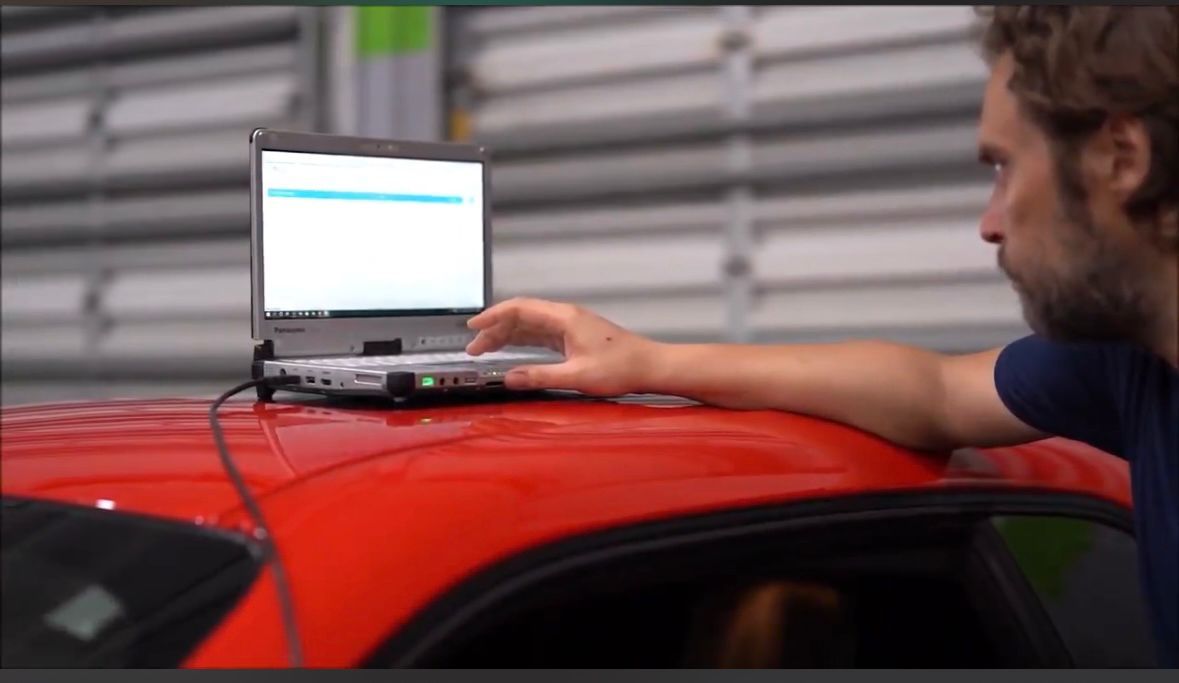
The rebuilt vehicle market in the United States has quietly become one of the largest and least discussed segments of the automotive economy.
Every year, millions of vehicles declared total losses by insurance companies return to public roads after restoration. They are sold through dealerships, listed on major marketplaces, financed, insured, and driven daily by American families. For many buyers, rebuilt vehicles are not a niche choice — they are the only financially realistic option in a market where new car prices continue to rise.
But as the market grows, another question is becoming harder to ignore: who is actually verifying how these vehicles are restored?
Florida entrepreneur and automotive engineer Vitalii Tkachenko believes the industry has reached a turning point.
After more than 17 years working inside the rebuilt vehicle sector, Tkachenko is now developing RTQP — Restoration Transparency and Quality Protocol — a structured operational framework designed to introduce documentation standards, restoration verification, and transparency processes into the rebuilt vehicle market.
According to Tkachenko, the issue is no longer simply about repair quality. It is about the absence of a unified system.
“The problem is not that rebuilt vehicles exist,” he says. “The problem is that the industry became massive before it became standardized.”
Today, rebuilt-title vehicles move through a fragmented system where inspection requirements vary significantly between states, documentation standards are inconsistent, and buyers often receive very limited information about what actually happened to a vehicle before it returned to the road.
Tkachenko says that over the years he repeatedly saw the same pattern: critical restoration decisions were being made without structured verification procedures or long-term accountability mechanisms.
“In many industries, if something affects safety, there is traceability,” he explains. “There are processes. There is documentation. There are systems for verification. In rebuilt vehicles, a huge amount still depends on assumptions.”
That realization became the foundation for RTQP.
Rather than positioning the protocol as a repair method, Tkachenko describes it as an operational infrastructure model for the industry — one focused on transparency, process standardization, supplier traceability, quality control, and consumer disclosure.
The concept includes multi-stage documentation procedures, structural verification standards, parts authentication protocols, quality-control reviews, and detailed disclosure systems for buyers.
According to Tkachenko, the rebuilt vehicle industry has historically operated faster than regulatory systems could adapt to it.
“Markets evolve faster than legislation,” he says. “That’s true in technology, finance, logistics — and it’s also true in automotive restoration.”
In recent years, national attention toward rebuilt vehicles has increased following multiple highly publicized incidents involving counterfeit airbag systems and fatal crashes connected to improperly restored vehicles. These cases intensified conversations about inspection gaps, documentation failures, and the broader lack of industry-wide operational standards.
For Tkachenko, however, the issue extends beyond isolated incidents.
“When the same structural weaknesses repeat themselves across the market, eventually you have to stop treating them as individual mistakes,” he says. “At some point, it becomes a systems problem.”
What makes the situation particularly complicated is the scale of the market itself. Rebuilt vehicles continue to serve a critical economic role in the United States, especially for middle- and lower-income families navigating rising transportation costs.
Tkachenko is careful not to position rebuilt vehicles as inherently unsafe or problematic.
“This market exists because there is real demand,” he explains. “Millions of people simply cannot afford new vehicles anymore. Rebuilt vehicles are filling an economic need. The question is whether the industry can evolve responsibly as it grows.”
That balance — preserving affordability while improving transparency and accountability — sits at the center of RTQP’s philosophy.
Industry observers note that conversations around operational transparency are becoming increasingly important across the automotive sector. As vehicles become more technologically complex, questions surrounding repair verification, parts traceability, sensor calibration, and structural integrity are becoming harder for both businesses and regulators to ignore.
Tkachenko believes the rebuilt vehicle market is approaching a moment where operational standards may become one of the industry’s defining competitive advantages.
“Trust is becoming infrastructure,” he says. “Five years ago, most buyers focused almost entirely on price. Today people are starting to ask different questions: Who restored the vehicle? What documentation exists? Can the process actually be verified?”
He argues that the future of the industry will belong not simply to companies that restore vehicles quickly, but to companies capable of building transparent, repeatable systems that consumers and regulators can trust.
At the moment, RTQP remains an actively developing framework. But Tkachenko says the long-term goal is much larger than a single company or operation.
“This is not about one dealership,” he says. “This is about whether the industry wants to continue operating reactively, or whether it’s ready to build standards before regulation eventually forces the conversation.”
For now, that conversation is only beginning.
Jonathan Ray
June 15, 2025