
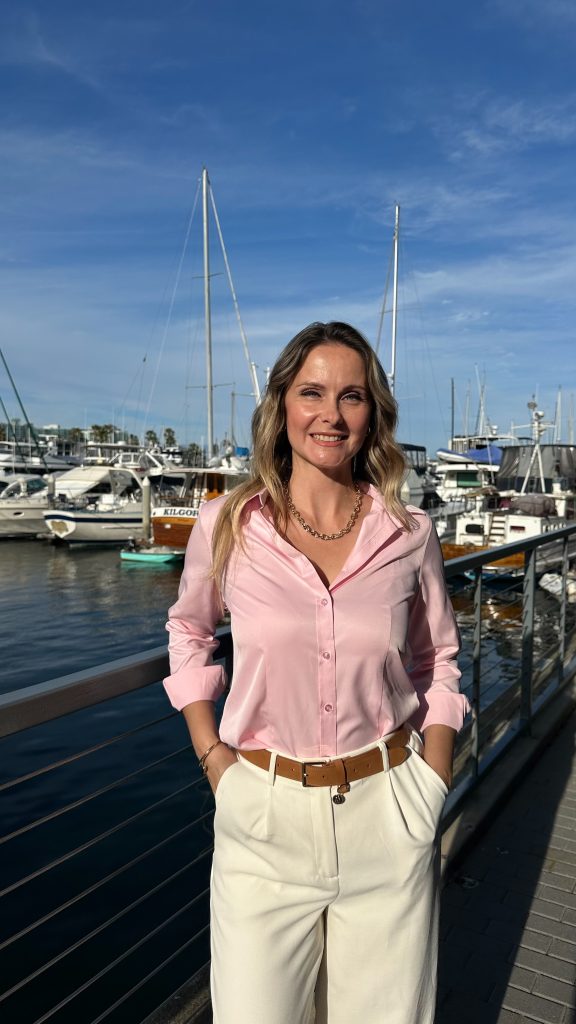
From multimillion-ruble budgets and major urban festivals to building a profitable business, event management professional Olga Kuparinnen has developed a career defined by operational precision, strategic thinking, and the ability to coordinate complex projects.
For visitors, a city festival is a celebration of culture, entertainment, and shared experiences. Behind the scenes, however, it is a demanding organizational operation involving dozens of interconnected processes, from staffing and logistics to financial planning, technical preparation, and contractor coordination.
Few visitors consider the number of decisions required to ensure that an event runs according to plan. For professionals responsible for its execution, those decisions are the very foundation of success.
For Olga Kuparinnen, an event and project management professional whose experience includes major urban festivals, corporate events, and entrepreneurship, understanding this complexity has become a defining professional strength.
Her career has taken her from financial operations to projects with budgets reaching 25 million rubles, teams of up to 30 people, and the independent creation of a children’s club operating across three locations. Throughout that journey, she has developed a management approach focused not simply on completing individual tasks, but on understanding how every element of a project contributes to its overall performance.
The Organizational Challenge Behind Moscow’s Major Festivals
Among the most significant chapters of Kuparinnen’s career was her involvement in projects associated with Moscow Seasons, a large-scale program of urban festivals held throughout the Russian capital.
Moscow Seasons is not a single annual celebration. It encompasses a recurring calendar of cultural and seasonal events that transform public spaces into festival destinations. Programs such as Journey to Christmas, Moscow Maslenitsa, Golden Autumn, and Times and Epochs have brought together entertainment, cultural activities, food, performances, and interactive experiences across the city.
The scale of the initiative illustrates the complexity of the work involved. In 2018 alone, the Moscow Seasons program recorded approximately 65 million visits across 12 festivals.
For event professionals, these numbers represent far more than audience engagement. Every festival requires detailed coordination among numerous participants, while the recurring nature of the program creates additional pressure to maintain operational consistency across successive events.
Kuparinnen gained experience in this environment through her collaboration with RELANTA, an event agency involved in large-scale and corporate projects.
Initially invited to work in an administrative capacity, she successfully completed her responsibilities and, approximately two months later, was offered continued collaboration in a project and event management role.
Her subsequent work involved project planning, budget coordination, contractor communication, team management, operational oversight, and financial documentation.
Throughout her event management career, Kuparinnen worked with budgets reaching 25 million rubles and coordinated teams of up to 30 professionals.
Yet the complexity of such projects cannot be measured by budgets or team sizes alone. A delay involving one contractor can affect technical preparation, staffing, the readiness of a venue, and ultimately the event schedule.
Kuparinnen’s approach developed around understanding these connections. Rather than viewing an event as a collection of independent assignments, she learned to manage it as an interconnected operational system.
From Financial Precision to Event Management
Kuparinnen’s professional background helps explain the analytical discipline she brought to the event industry.
In 2010, she graduated from the Russian State University of Tourism and Service with a degree in Organization Management. She subsequently worked in banking, handling card operations, payments, transfers, and financial documentation.
The banking sector required accuracy, procedural consistency, and close attention to detail. It also provided valuable experience in understanding how individual operations fit into larger organizational processes.
By 2014, Kuparinnen had begun developing her career in event management, initially organizing smaller local projects before progressing to larger and more complex assignments.
Her transition was driven by an interest in combining structured management with communication, creativity, and the opportunity to see the tangible results of her work.
As her responsibilities expanded, she became increasingly involved in the full project cycle, from preparing proposals and coordinating budgets to supporting event execution and completing financial documentation.
This combination of financial and operational experience became particularly valuable in an industry where creative ambitions must constantly be balanced against practical constraints.
When Fifteen Minutes Change the Entire Plan
The ability to respond effectively to unexpected circumstances is among the most demanding aspects of event management.
During one festival, Kuparinnen encountered a situation in which an unexpected power outage disrupted a workshop dependent on technical equipment. With approximately 15 minutes to find an alternative, the team had to reconsider the format of the activity.
Rather than canceling the workshop, they adapted the program to the available resources and continued working with participants.
The incident demonstrated the importance of understanding which elements of an event are essential and which can be adjusted without compromising the experience.
In another situation, an unsuccessful initial distribution of employees across event locations created tension within the team. Kuparinnen addressed the problem by reorganizing assignments and restoring effective collaboration within a single day.
These experiences reinforced her view that successful management requires more than the ability to follow a predetermined plan. It also demands judgment, adaptability, and a clear understanding of how people and processes interact.
Her professional versatility extended to corporate event management, including participation in the organization of a weeklong program in Sochi for KAMAZ, a major automotive manufacturer.
The event brought together several hundred participants and included team-building activities, themed challenges, corporate competitions, an awards ceremony, and a celebratory reception.
Working across public festivals and corporate programs allowed Kuparinnen to develop experience with different audiences, organizational structures, and client expectations.
Building a Business from the Ground Up
While large festivals provided experience in coordinating complex operations, Kuparinnen’s entrepreneurial work gave her an opportunity to build an entire organizational structure independently.
She established a children’s summer club, developing its concept, visual identity, website, staffing model, promotional strategy, and operational processes.
The project eventually operated across three locations, serving approximately 45 children simultaneously.
Kuparinnen was responsible for coordinating staff, facilities, educational activities, customer communication, marketing, and financial management.
The first season concluded with a modest positive financial result. By its second season, the business had become profitable.
For Kuparinnen, this achievement was particularly significant because it required responsibility for the entire organization rather than one component of a larger project.
Running the club also involved challenges that could not always be anticipated during planning: staffing shortages, changing rental conditions, customer requests, and operational adjustments.
Her familiarity with every part of the business allowed her to make decisions based on an understanding of how changes would affect the broader organization.
The experience reinforced a principle that had already emerged during her work with festivals: effective leadership depends on knowing how different functions interact and ensuring that the organization can continue operating when circumstances change.
A Career Defined by Systems Thinking
Across banking, festival production, corporate events, and entrepreneurship, a consistent theme runs through Kuparinnen’s professional experience: the importance of treating complex operations as interconnected systems.
A successful event is not simply one that takes place on schedule. Its effectiveness also depends on the resources used, the quality of coordination, the decisions made under pressure, and the lessons that can be applied to future projects.
For recurring festivals and seasonal businesses, this last consideration is especially important. Each completed project generates valuable practical knowledge about scheduling, staffing, budgets, contractors, and operational challenges.
Kuparinnen’s experience has led her to place particular emphasis on preserving that knowledge and using it to improve future planning.
Her professional philosophy is rooted in the belief that strong management should not rely exclusively on solving problems as they arise. It should also involve understanding their causes, recognizing dependencies between tasks, and developing processes that reduce the likelihood of repeated difficulties.
A New Professional Chapter in the United States
In late 2023, Kuparinnen relocated to the United States and settled in Los Angeles, bringing with her experience across several areas of organizational and event management.
Her background combines financial discipline, practical experience in large-scale festival operations, corporate event coordination, and the responsibilities of building an independent business.
Together, these experiences have shaped a professional perspective that extends beyond the visible outcome of an event to the management systems responsible for making it possible.
For Kuparinnen, the central challenge of event management is not simply creating a successful experience for an audience. It is ensuring that the people, resources, schedules, and decisions behind that experience operate as a coordinated whole.
From major city festivals to her own profitable enterprise, her career demonstrates the value of understanding complex organizations from the inside — and the professional discipline required to manage them effectively.
By Lora May
Publication date: April 12, 2024